Design codes are being prepared more frequently given more direct reference recently to design coding in the National Planning Policy Framework (2026), specifically in Chapter 12: Achieving well-designed places. Design codes are typically prepared to support proposals for large scale, residential-led mixed-use development.
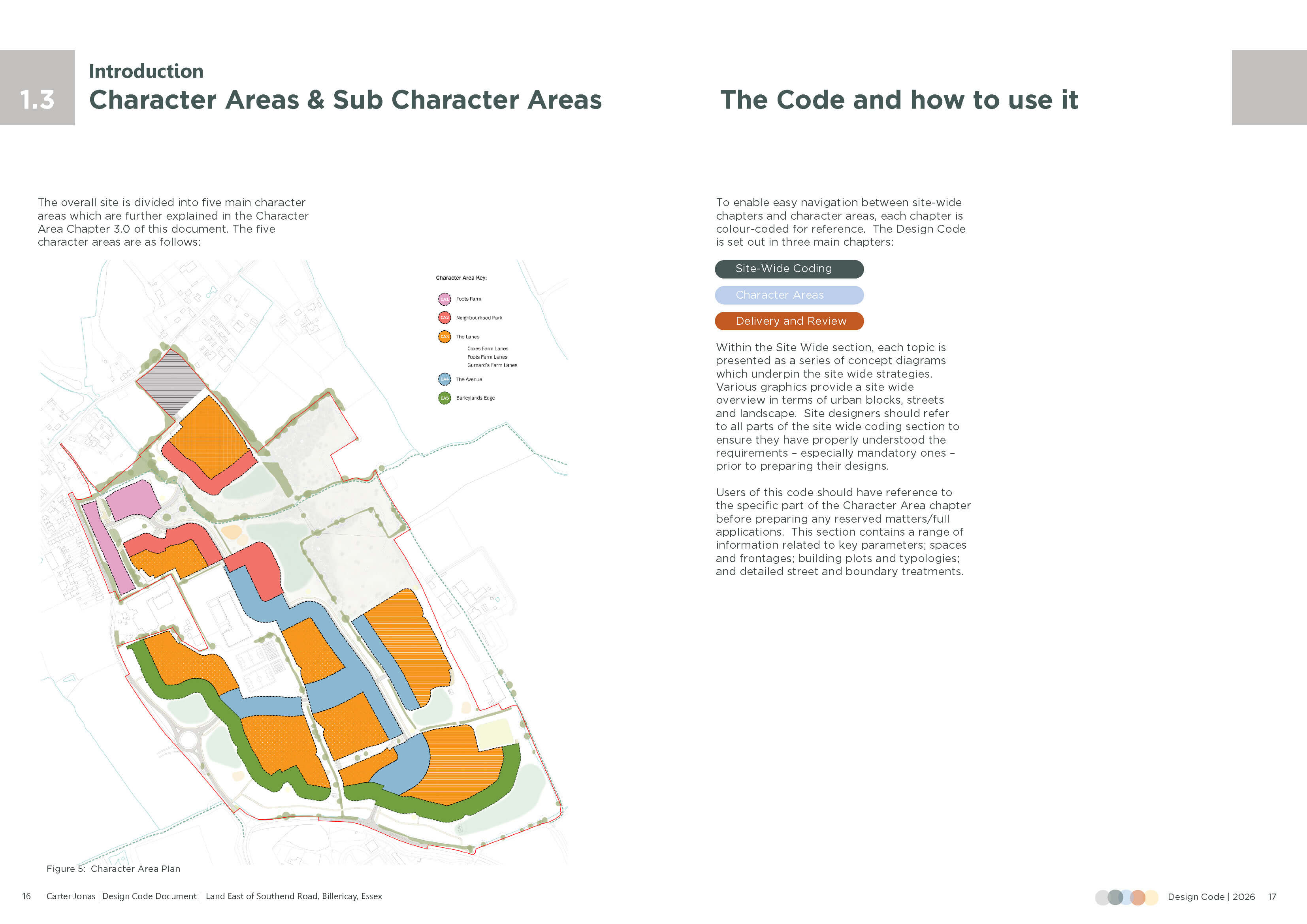
Example of Design Coding
While not a universal set of requirements, design codes usually work best when dealing with three pre-conditions:
A large scale development;
A development that will be built out over several years;
A development that is likely to involve more than one housebuilder.
We have prepared many design codes for both national housebuilder clients but also for site promoters and developers around the country, including in Cambridgeshire, Essex, Chichester, Northamptonshire, Bedfordshire, Derbyshire, and Cheshire. We take a thorough approach to preparing codes that involves a detailed examination first of local building and landscape character in order to ensure that new homes and places are “grounded” in the locality in which they are found and to ensure that new development is legible and of a high quality. We can also run design code “testing” events, usually over 1-2 days, and work closely with our clients to ensure desired design details are properly reflected in codes.
We can also prepare “plot passports” which provide individually, tailored “rules” or guidance for an individual development plot as part of new development. Plot passports are most appropriate for “self-build” projects where the developer or promoter seek to create a degree of design control over the completed scheme.
Our clients include national housebuilders and small and medium sized developers and site promoters. We typically include design codes as part of an outline planning application submission; however design codes can also be prepared as a condition of a planning application approval.
Our team will contact you directly to discuss your property needs.