

What is IOS and Why It Matters
This article explores what qualifies as IOS, how it differs from traditional industrial property and why growing occupier demand and constrained supply continue to attract investor attention.
Industrial Open Storage (IOS) is one of the fastest-evolving subsectors in real estate, with an estimated asset class value of £16-£20 billion in the UK. As investor interest continues to grow and the market becomes increasingly institutionalised, one question is being asked more frequently:
What actually counts as IOS?
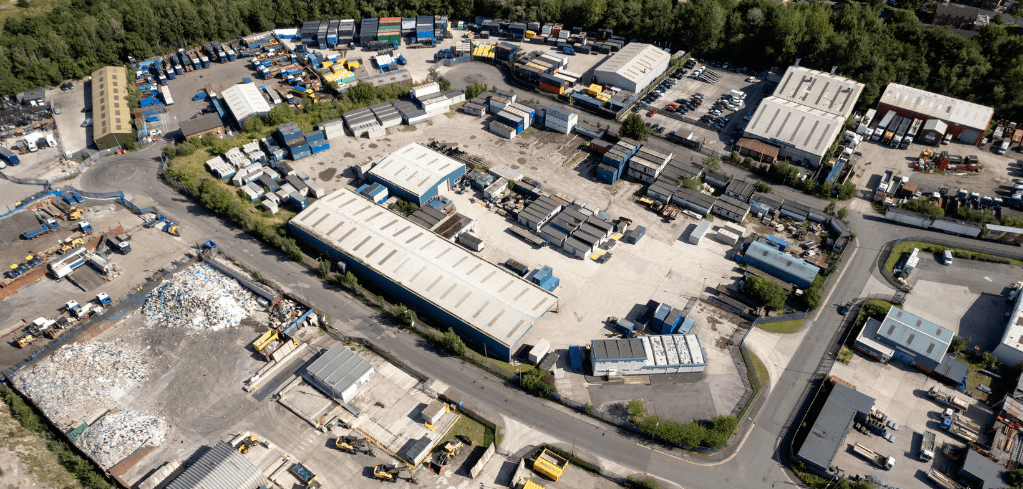
Industrial Open Storage (IOS), also referred to as open storage or storage yards, comprises land and sites used for outdoor storage, distribution, processing, servicing and parking activities. Historically, IOS was often associated with interim infill sites, open yards and operational land that sat outside the focus of many investors. Today, that perception has shifted significantly.
The growth of infrastructure investment, logistics activity and operational space requirements has transformed IOS into a recognised asset class that supports a wide range of industries across the UK economy.
Andrew Smith
Partner, IOS Lead
FRICS SIOR MBA

A market more diverse than many realise
One of the most common misconceptions surrounding IOS is that it is limited to vehicle parking and transport uses.
Analysis of enquiries received by Carter Jonas during the last two quarters demonstrates that while parking accounts for the largest proportion of overall demand by acreage, representing 52.4% of total demand, the market is considerably broader than many assume.
Demand is being generated by a diverse range of occupiers and sectors, including:
- Haulage and logistics operators
- Construction and infrastructure businesses
- Plant and equipment hire companies
- Container storage providers
- Utility companies
- Manufacturers
- Wholesalers
- Recreational operators, including padel court providers
This diversity highlights a key characteristic of the asset class. IOS is not defined by a single use but by the operational value that external space provides to occupiers.
Bringing clarity to a growing asset class
As the market matures, greater clarity is required around what qualifies as IOS and how assets should be assessed.
To address this challenge, Carter Jonas has developed a classification framework that identifies the core characteristics of IOS assets. By applying weighted criteria to these characteristics, assets can be categorised into Classes 1-4, each reflecting a different quality and investment grade.
The framework recognises that not all open storage sites are equal. Factors such as surfacing quality, accessibility, security, planning status and operational functionality can significantly influence occupier demand and investment performance.
As institutional capital continues to enter the market, establishing clear standards will be essential in providing transparency and consistency across the sector.
How does IOS differ from traditional industrial and logistics assets?
While IOS sits within the wider industrial property market, it differs from conventional industrial and logistics assets in several important ways.
Site coverage
Traditional industrial assets derive much of their value from internal floorspace and building specification. In contrast, IOS value is primarily driven by the quality, scale and functionality of the external yard area. Buildings frequently occupy only a small proportion of the overall site.
Typical occupiers
IOS generally attracts occupiers whose operations depend on outdoor space. Common tenants include haulage firms, construction companies, plant hire operators, utility providers and container storage businesses that require secure external areas to support their day-to-day activities.
Operational requirements
Operational characteristics often have a greater influence on IOS value than building features. One of the primary indicators of asset quality is yard surfacing and site functionality, reflecting the importance of operational efficiency for occupiers.
Lower construction requirements
Because IOS sites typically contain fewer buildings, development and capital expenditure requirements can often be lower than those associated with traditional industrial schemes. This can create attractive investment opportunities where strong occupier demand coincides with constrained supply.
Why the IOS market matters
The growing importance of IOS reflects wider structural changes taking place across the UK economy.
Businesses increasingly require flexible operational space to support logistics, infrastructure delivery, fleet management, construction projects and industrial activity. At the same time, the supply of suitable land remains limited, particularly in strategic industrial and urban locations.
This imbalance between supply and demand has elevated IOS from a historically overlooked property type to a recognised investment sector attracting growing interest from occupiers, developers and investors alike.
However, continued growth will depend on the market developing greater transparency and consistency around asset classification and quality assessment.
IOS is no longer simply surplus industrial land. It is a distinct and increasingly sophisticated asset class that underpins critical economic activity across logistics, construction, infrastructure, manufacturing, utilities and distribution.
Understanding what IOS is, and why it matters, will be essential for anyone looking to participate in one of the UK's fastest-growing real estate sectors.
Meet the Team
- Loading...
- Loading...
Research and Insights
 Read insight
How much does it cost to develop an Industrial Open Storage site in the UK?
Discover the costs of developing an Industrial Open Storage (IOS) site in the UK. Get expert insights from Carter Jonas to plan your investment effectively.
 Read insight
Industrial Insights & Outlook | Autumn 2026
Explore Carter Jonas' Industrial Insights & Outlook Autumn 2026 for expert analysis, market trends, and forecasts shaping the industrial property sector this season.
 Read insight
Industrial Outdoor Storage | Q1 2026
How rising industrial demand, sustainability standards, and emerging technologies continue to shape the future of open storage.