
Model Estate 2023
Welcome to the 2023 Model Estate research report, the thirteenth annual publication produced by Carter Jonas, which documents the changing nature of a rural estate and its diverse range of income streams.
Overview
Traditional rural estates have, historically, been attractive to investors and high-net-worth buyers as they provide secure and consistent assets, whilst often affording exceptional family homes and other amenity interests. Against uncertainty in the wider economy, the variety of assets in a multi-let estate offer income stability and partial protection from commodity price volatility.
Many rural estates also continue to consider opportunities for capital growth through development and asset release opportunities. This includes the release of farms and residential properties from multi-generational occupations and the opportunities for restructuring which may release valuable sites for development.
About the Model Estate
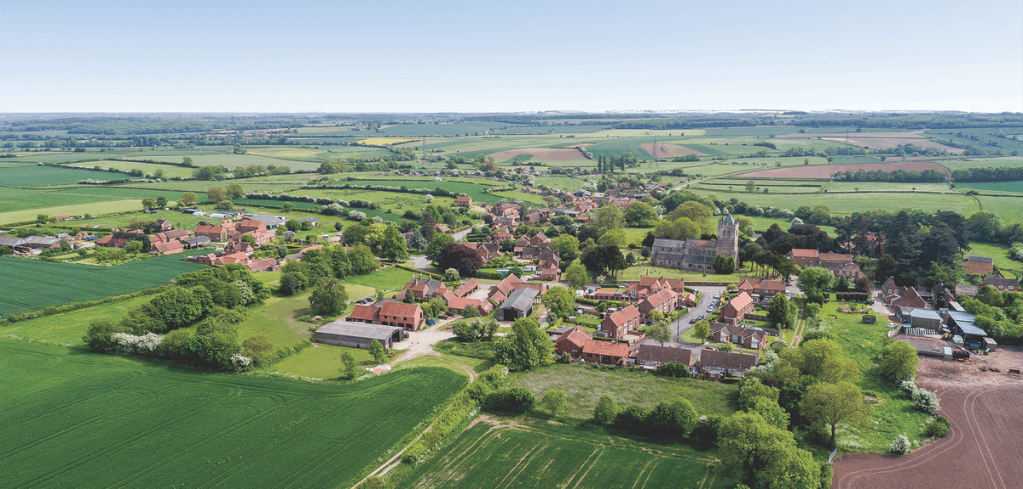
The Model Estate is a hypothetical agricultural estate created by Carter Jonas in 2010. The Estate has evolved over the years and currently comprises 3,203 acres which includes a combination of let and in-hand farms, a commercial and residential portfolio, a telecoms mast, fishing rights, a syndicate shoot, a solar farm, and a quarry. It is located within the geographical triangle bounded by the M4, M40 and M5 motorways.
Why was the Model Estate created?
In using the analogy of a mixed rural estate, similar in structure to many under the management of Carter Jonas, we can gain an interesting and helpful insight into the performance of a rural estate and the dynamics that are at play. This enables us to make strategic recommendations for the coming months.
The Model Estate is also used to compare the short- and long-term capital value performance of agricultural land and assets against a basket of alternative asset classes: residential and commercial property, equities, gold, fine wine and classic cars.
Please note that all findings in this report are based on valuations undertaken on 31 December 2022.
Components
The Model Estate was valued at £50.12m in December 2022, representing an annual increase of 6.9% against a value of £46.88m in 2021. Capital values have increased steadily over the last 10 years, with 10-year annualised growth at a healthy 5.1%, or 64.2% cumulatively.
A significant uplift in the farmland market, reflected in both in-hand and let farmland, has bolstered the total capital value of the Estate. Combined, these assets account for 56.7% of the total value of the Estate. The ‘other’ assets on the Estate, namely the solar farm and quarry, also saw impressive growth. This sub-section also includes a telecoms mast, syndicate shoot and fishing rights. The value of the residential assets increased too, although to a lesser extent. However, the value of the manor house has remained the same and the commercial element saw a moderate decline in value.
Total value: £50.12m
Annual change: 6.9%
Component | Description |
|---|---|
Let farms | 1,499 acres of arable land and 371 acres of pasture land. Six farms, four let on FBTs and two let on AHAs Three farmhouses, one let on an FBT and two let on AHAs. Four cottages, one let on an Ag Protected tenancy and three let on ASTs. |
In-hand farms | 1,073 acres of arable land, 71 acres of pasture land, 60 acres of woodland and 21 acres of tracks. One four-bedroom farmhouse. |
Manor house | A Grade II listed Manor House and 23 acres of amenity woodland. |
Let residential | Seven houses, five let on ASTs, one let on an Ag Protected tenancy and one vacant. |
Let commercial | 13 properties, all let on L&T tenancies. |
Other | A telecoms mast, syndicate shoot, solar farm, fishing rights and a quarry. |
Key:
FBT Farm Business Tenancy; AHA Agricultural Holdings Act 1986 tenancy;
Ag Protected Rent (Agricultural) Act 1976 tenancy; AST Assured Shorthold Tenancy;
Rent Act Rent Act 1977 tenancy; L&T Landlord and Tenant Act 1954 tenancy
Figure 1 – Components of the Model Estate (by capital value)
Component performance
In a year defined by rocketing inflation, faltering economic growth and political turmoil, rural estate owners have been presented with numerous headwinds. Although the UK narrowly avoided a technical recession in 2022, some property markets have been more adversely affected than others, reflected in the varying performance of the different elements of the Estate. Despite this, the overall value of the Estate increased.
Figure 2 - Model Estate Performance, 31 December 2022
Model Estate 2023 - Accordion
Alternative asset classes
The only asset class to see stronger growth than the Estate was classic cars.
Figure 3 - Long-term alternative asset class performance
When ranked against a range of alternative investments for growth in value in 2022, the Model Estate outperformed almost all assets and ranked second (see figure 3). The bank of assets includes fine wine, gold, classic cars, equities, residential property and commercial property.
The only asset class to see stronger growth than the Estate was classic cars, where the HAGI Top Index reported a 18.0% annual increase, the fastest rate in nine years. Although many challenges existed for the classic cars market in 2022, such as rocketing fuel prices and disrupted supply chains for parts, there were still record sales and significant, high-ticket transactions.
The fine wine market was also bullish in 2022. The Liv-ex Fine Wine 100 index increased by 6.8% year-on-year after reaching a record high in September, just below the Model Estate’s 6.9%. The market’s strong performance from late 2020 onwards has brought an influx of new players, typically high-net-worth individuals, who have been looking to fine wine to diversify their investment portfolios. Over the longer term, both classic cars and fine wine have witnessed impressive growth, with 10-year annualised growth rates of 11.0% and 4.9% respectively.
In the face of political and economic headwinds, many assets had a volatile year and saw an overall decrease in value. Despite falling steeply throughout most of the year, the gold market rebounded in Q4 and ended the year down just -0.2%. An increase in demand from central banks and institutions is a key reason for this bounce back. The equities market, measured using the FTSE All-Share index, also had a turbulent year and decreased in value overall by 3.2%. Prices plummeted by 15.1% from its peak in February to its low in October, then jumped 11.5% in the last quarter.
2022 represented a year of price corrections for the commercial and housing markets, reflected in the MSCI Quarterly Index for residential and all (mainly commercial) property. While MSCI reports capital values for the residential investment sector to have dropped by 4.9% over the year, the all property index decreased by a substantial 12.8%. Industrial assets saw the greatest fall in value (-17.4%), and no property sub-group (retail, office, industrial, residential, hotel and ‘other’) recorded an annual increase.
Get in touch
- Loading...
- Loading...
- Loading...
Research and Insights
 Read insight
Commercial Market Outlook
Our commercial market outlook, published by our research team, is continually being reviewed and updated with our latest insights.
 Read insight
How much does it cost to develop an Industrial Open Storage site in the UK?
Discover the costs of developing an Industrial Open Storage (IOS) site in the UK. Get expert insights from Carter Jonas to plan your investment effectively.
 Read insight
Industrial Insights & Outlook | Autumn 2026
Explore Carter Jonas' Industrial Insights & Outlook Autumn 2026 for expert analysis, market trends, and forecasts shaping the industrial property sector this season.
Tailored newsletters for you
Sign up to our newsletter to receive further information and news tailored to you.